Governance of Palestinian Refugee Camps or Their Reengineering?
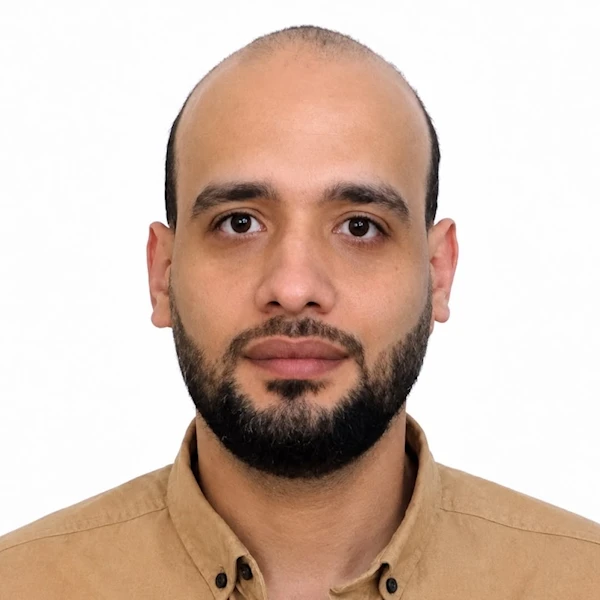
Hisham Issawi
Tuesday, 20 October 2026
Palestinian and Lebanese attention in Lebanon is turning toward the plan for the governance of Palestinian refugee camps, whose provisions the Lebanese-Palestinian Dialogue Committee intends to announce at the end of this month. What is the background to this announcement? What is the significance of its timing? And what about the civil rights of Palestinian refugees in Lebanon?
These are questions to which no one has clear answers, particularly the last question concerning the civil rights of Palestinian refugees in Lebanon. For more than a year, we have witnessed the adoption of new laws and decisions in Lebanon affecting Palestinian nurses and media professionals. How, then, can this plan succeed while the policy of restricting and besieging Palestinians in Lebanon continues? And did those who drafted the plan visit the alleyways of the Bourj al-Barajneh, Rashidieh and Ain al-Hilweh refugee camps before preparing it?!
There is another matter that Palestinian public opinion must address: the persistence of the official Lebanese view of the camps as security enclaves, alongside the continuation of certain media narratives that implicitly demonize the camps, with the aim of weakening them, undermining their resilience and subjecting them to psychological support and family planning projects. This is in addition to creating fertile ground for the spread of the scourge of drugs within Palestinian society, turning the camps into a “bogeyman” and a “weapon” brandished against Palestinians whenever they demand their rights.
The current period through which our camps are passing is delicate and critical. It calls for a cultural and intellectual awakening among the youth of the camps, enabling them to determine what they want and rise up against policies of siege and displacement, as well as against the policies of UNRWA, whose course of systematically eliminating its services appears set to continue until the very last pill of medicine in its clinics. Only then does the wave of lamentation, condemnation and statements of rejection begin, in a response that never goes beyond a reactive approach. It is this approach that has allowed UNRWA Director of Affairs Dorothy Klaus, and those behind her, to dare to target our students by closing schools and merging classes, our patients by continuing the policy of reducing hospitalization services, and our people through the flour distribution campaign, which is both laughable and heartbreaking in what it reveals about the state of deprivation and ignorance we have reached.
The time has come to say “No” to any plan that reengineers our camps and changes their identity under a new term called “governance.”
The time has come for us to say: “Enough!” We want our rights in full. We are not an issue in Lebanese domestic politics, nor are we merely numbers to foreign donors.
Human rights are not granted in exchange for political concessions. The Palestinian’s right to work in Lebanon is not a favor bestowed by anyone, but rather a duty and a Lebanese interest in maintaining stability, as well as a purely economic interest that contributes to improving the cycle of industrial, agricultural and service-sector production. Starving Palestinians and forcing them to preoccupy themselves with securing their daily bread, on the other hand, threaten a social and popular explosion.
The time has come for a Palestinian national popular uprising, and we must not hesitate to pursue it, in order to strengthen our camps and preserve the dignity of their people—a dignity that some are attempting to redefine as a “relief aid carton” from one association or a shopping voucher from another.
The time has come to revive labor organizing in the Palestinian refugee camps, to define workers’ rights in accordance with international law, and to raise our voices loudly against all policies of injustice, deprivation and starvation.
Originally published at Al-Akhbar.