Generations of Liberation Conference in Beirut: On Its Necessity and Tasks — Hisham Issawi
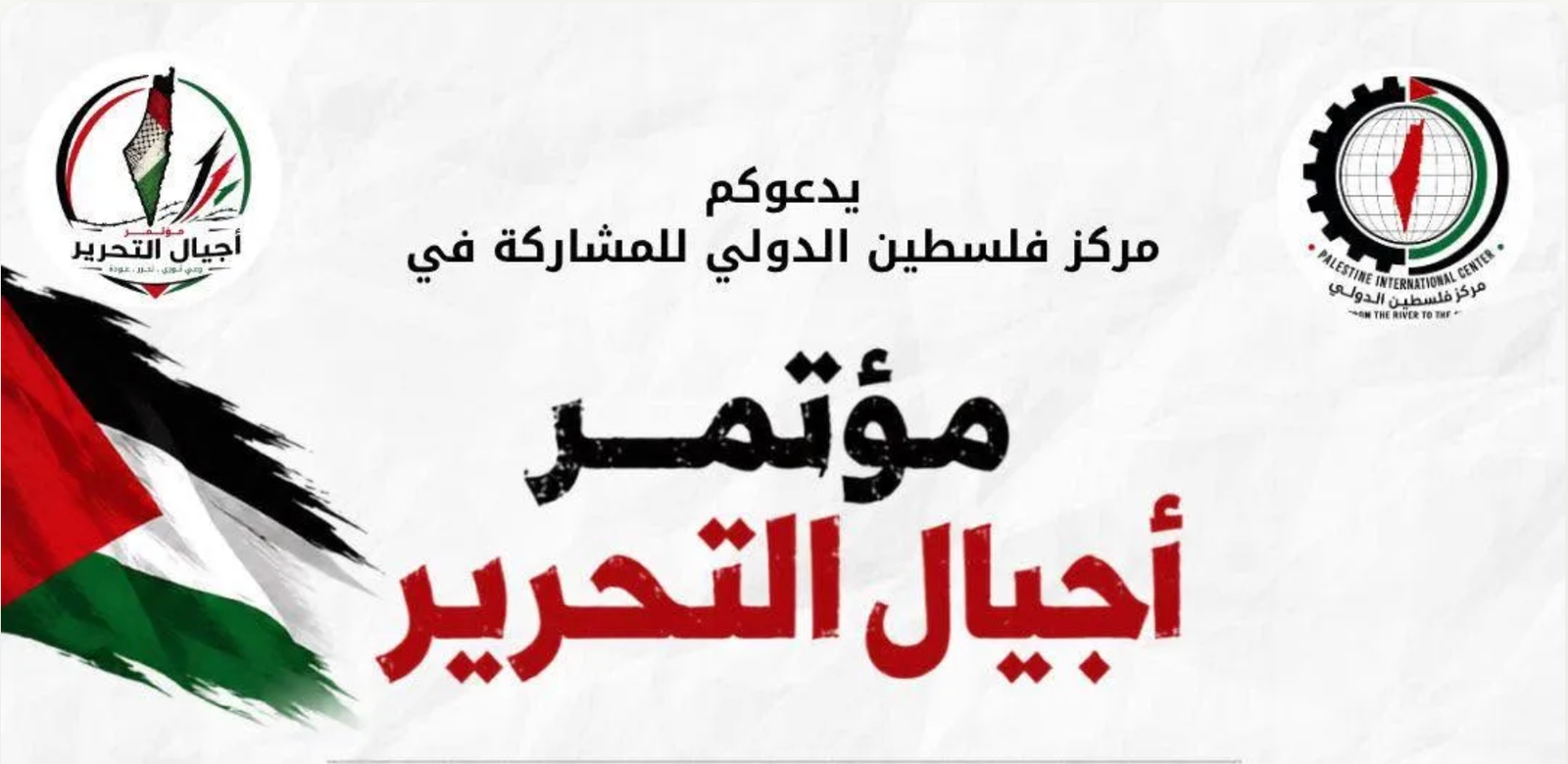
The following article was originally published in Al-Akhbar newspaper in Lebanon, in Arabic, on Friday, September 4, 2026. The Ajyal al-Tahrir (Generations of Liberation) conference will take place on Saturday, September 19, beginning at 9 am, at Al-Jinan Hall, Batoul High School, Bir Hassan, Beirut. Register to participate: https://docs.google.com/forms/d/e/1FAIpQLSdh-u0DuHm5n-zGPQgOKpjkP09LPs76_cVmVnUgBJi5YTL5Jg/viewform
The Lebanese capital, Beirut, is preparing to host the “Generations of Liberation” (Ajyal al-Tahrir) Conference, organized by the Palestine International Center on September 19, 2026. The conference seeks to open a space for dialogue about Palestine, the memory of struggle, and the role of new generations in reviving the cultural, intellectual and political consciousness of our youth in the Palestinian refugee camps.
The conference is being held in Beirut, a city that holds a special place in contemporary Palestinian history. Beirut was never merely a city that welcomed Palestinians; over the decades, it became a central space for Palestinian and Arab political, cultural and media discussion. It embraced generations of fighters, intellectuals, artists, students and activists, and its streets witnessed numerous heroic battles and struggles.
From Generation to Generation: Toward Palestine
The title of the conference, “Generations of Liberation,” carries a significance that goes beyond the temporal meaning of the word “generations.” Since the Nakba, the Palestinian cause has not been passed from one generation to the next merely as a memory, but as a living cause connected to identity, justice, and the Palestinian people’s right to liberation and return.
Today, young people in the camps do not need new platforms for mere speeches. Rather, they need a free Palestinian space where they can speak in their own voices about their reality and their suffering; about the poverty, unemployment, deprivation and restrictions they face; and about the future of their camps, and where they can transform this suffering into an organized force for action, initiative and struggle for their rights.
At the same time, the responsibility of Palestinian youth in Lebanon does not end at the boundaries of the camps. The Palestinian people are one, the cause is one, and the battle is one. Hence the necessity of building strong bridges between young people in the camps and Palestinian youth in the homeland and the diaspora, while strengthening communication with youth and student movements and solidarity and liberation movements around the world.
Deep down, Palestinian youth understand that their battle is not a marginal one, nor can it be reduced to questions of services or seasonal activities. It is an existential battle against erasure and genocide and for identity, dignity and existence. It is a battle to defend the refugees’ right to a dignified life and their inalienable right to return to Palestine.
This is where the importance of examining the role of the new generations emerges. They confront a different Palestinian, Arab and international reality and use new tools in media, culture, youth organizing and rights advocacy. These generations are searching for new ways to preserve Palestine’s presence at a time when the battle over narrative, consciousness and memory has become an essential part of the struggle.
The choice of Beirut as the location for the conference adds a special meaning to its title. Historically, the city has been closely connected to the Palestinian presence, to the Palestinian refugee camps in Lebanon, and to the cultural, media and political movements that accompanied different stages in the history of the Palestinian cause.
In this context, the conference can provide a space that brings together memory and experience with the questions confronting the new generation: How can we restore the camps to their pioneering role in leading the Palestinian national movement? How is memory passed from one generation to the next? What roles can culture, art, media, education and youth play in keeping Palestine present in public consciousness? And how can we, as young people in the camps, obtain our social and economic rights in Lebanon?
A New Generation with New Questions
“Generations of Liberation” can provide an opportunity to revisit the concept of Palestinian liberation from a broader perspective. Liberation is not connected only to politics; it is also connected to knowledge, identity, culture, resistance, and the ability to produce the Palestinian narrative and protect it from being forgotten.
It also means liberation from the policies of restriction and siege imposed by the Lebanese government on the Palestinian camps in the areas of employment, education, health, infrastructure, the entry of construction materials, and other fields.
Within this framework, the participation of youth and young generations is an essential element in any discussion about the future of the Palestinian refugee camps. Palestinian youth in the camps live a reality different from that experienced by previous generations. At the same time, however, they carry a memory that did not begin with them but was passed down to them—a memory that is now confronting hostile attempts to re-engineer it once again.
Therefore, we say:
The time has come for the young men and women of the Palestinian refugee camps to say: Enough of playing with our future. We want our rights in full. We want to revive our camps. We want to return.
The time has come for the youth of Palestine to advance to the front lines, to take their natural place in leading national and social work, and to transform themselves from an audience that waits into a generation that acts and takes initiative, and from scattered energies into an organized force.
Generations of Liberation are born and begin in the camp, but they always travel the road of return toward a liberated Palestine, from the river to the sea.