Naji al-Ali: When Handala Returns to the Camp
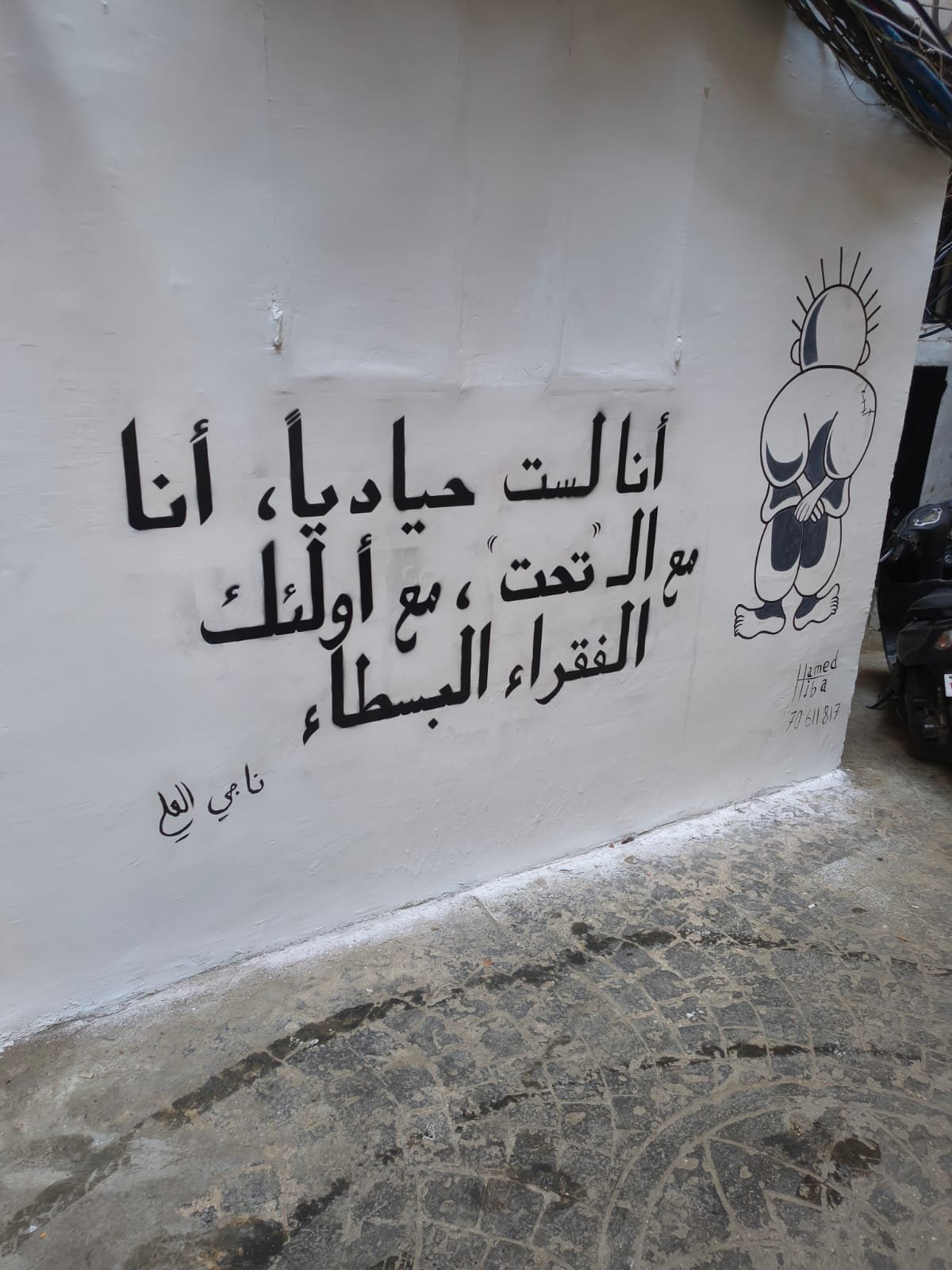
In the camp, walls are not merely concrete and stone; they carry the memory of the people, the names of the martyrs, images of the homeland, and the slogans of generations born carrying Palestine in their memories and consciousness.
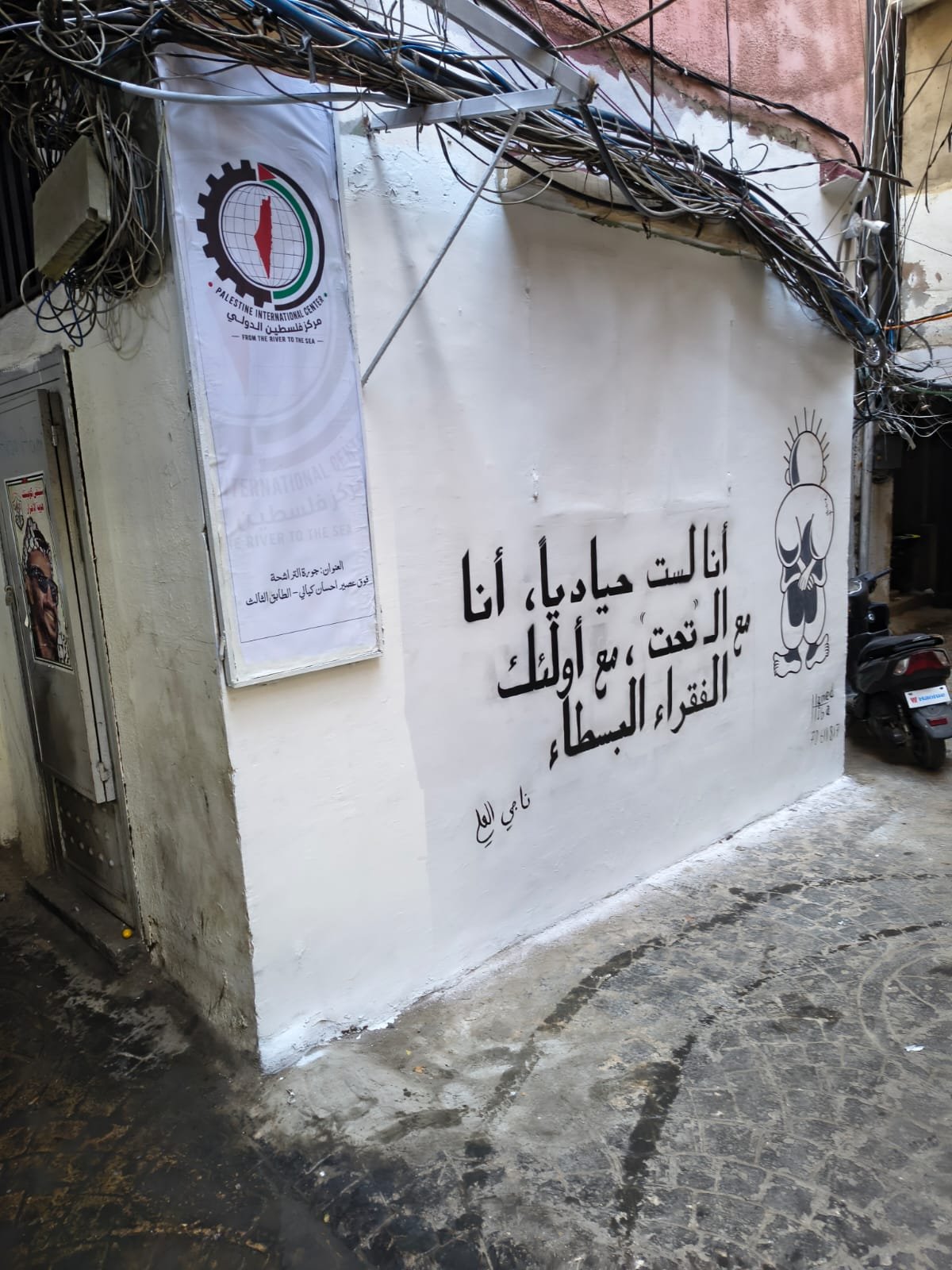
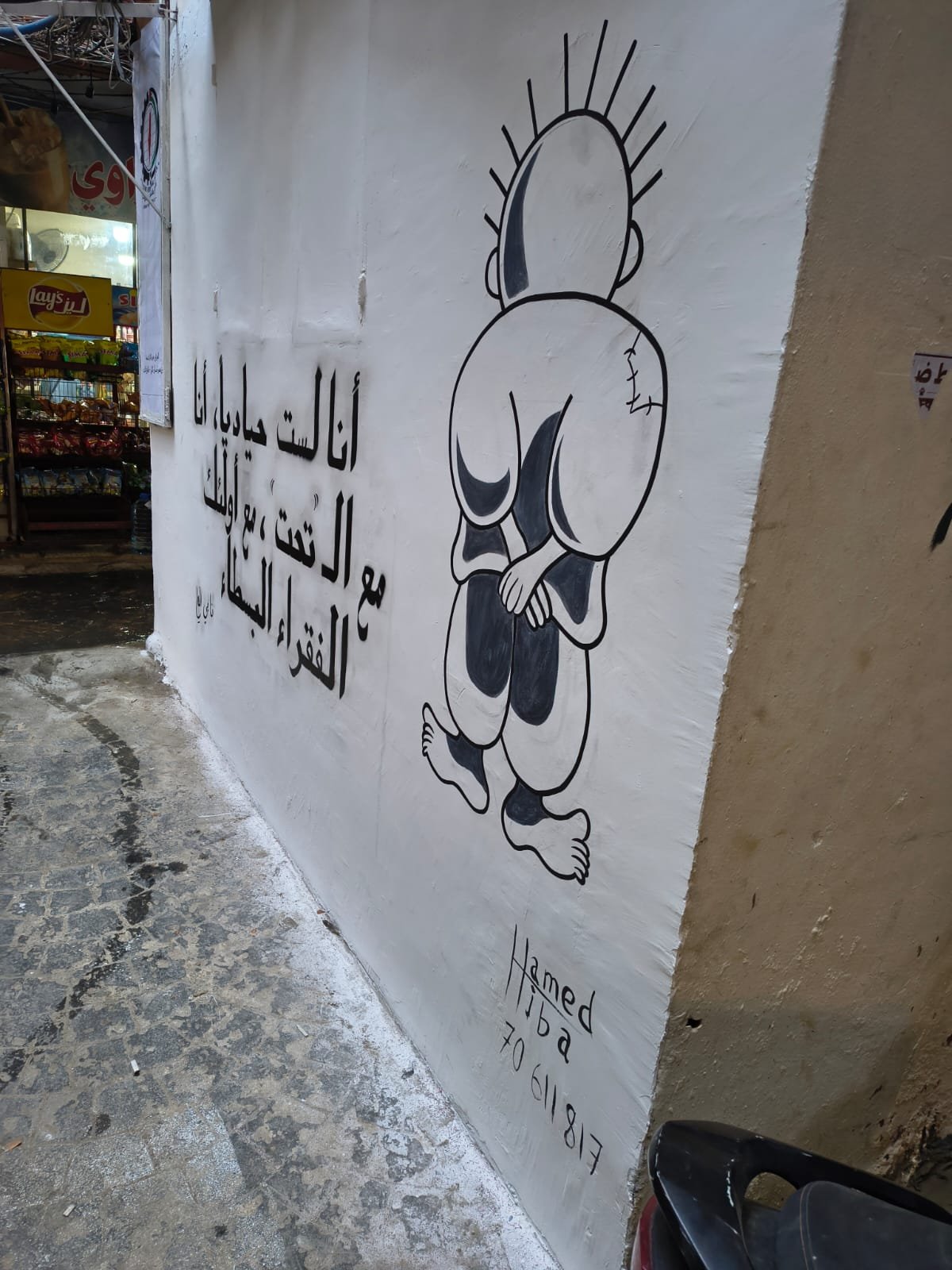
It is in this spirit that the Palestine International Center has launched an initiative to paint a mural of Palestinian artist Naji al-Ali in Bourj al-Barajneh refugee camp, as a tribute to an artist who transformed walls, paper, and images into spaces for defending the Palestinian people and their right to their homeland.
It was from Ain al-Hilweh refugee camp that Naji al-Ali began his journey into journalism and caricature, after his drawings caught the attention of Palestinian writer and journalist Ghassan Kanafani, who helped publish one of his drawings in *Al-Hurriya* magazine. From that point onward, Naji’s pen became a widely heard voice, expressing the experiences of Palestinians, refugees, the poor, and all those without a platform from which to speak.
From Ain al-Hilweh to Bourj al-Barajneh
Painting a mural of Naji al-Ali in Bourj al-Barajneh refugee camp carries a meaning that goes beyond the idea of honoring an artist who has passed away. It is a way of returning Naji to the place where his art belongs: the camp.
Naji al-Ali did not see the camp merely as a place to live, but as a space that holds Palestinian memory. Placing his image on one of the walls of Bourj al-Barajneh therefore transforms part of the camp into an open page that recalls his life, his drawings, and his symbols, while connecting new generations with the history of Palestinian art.
Today, when a mural of Naji al-Ali is painted in Bourj al-Barajneh refugee camp, it is not merely an image on a wall. It is a message that the Palestine International Center seeks to affirm: that art preserves memory, that the walls of the camp can speak, and that Palestine will continue to be carried forward through generations of liberation until return.